A classroom Valentine exchange that works without candy

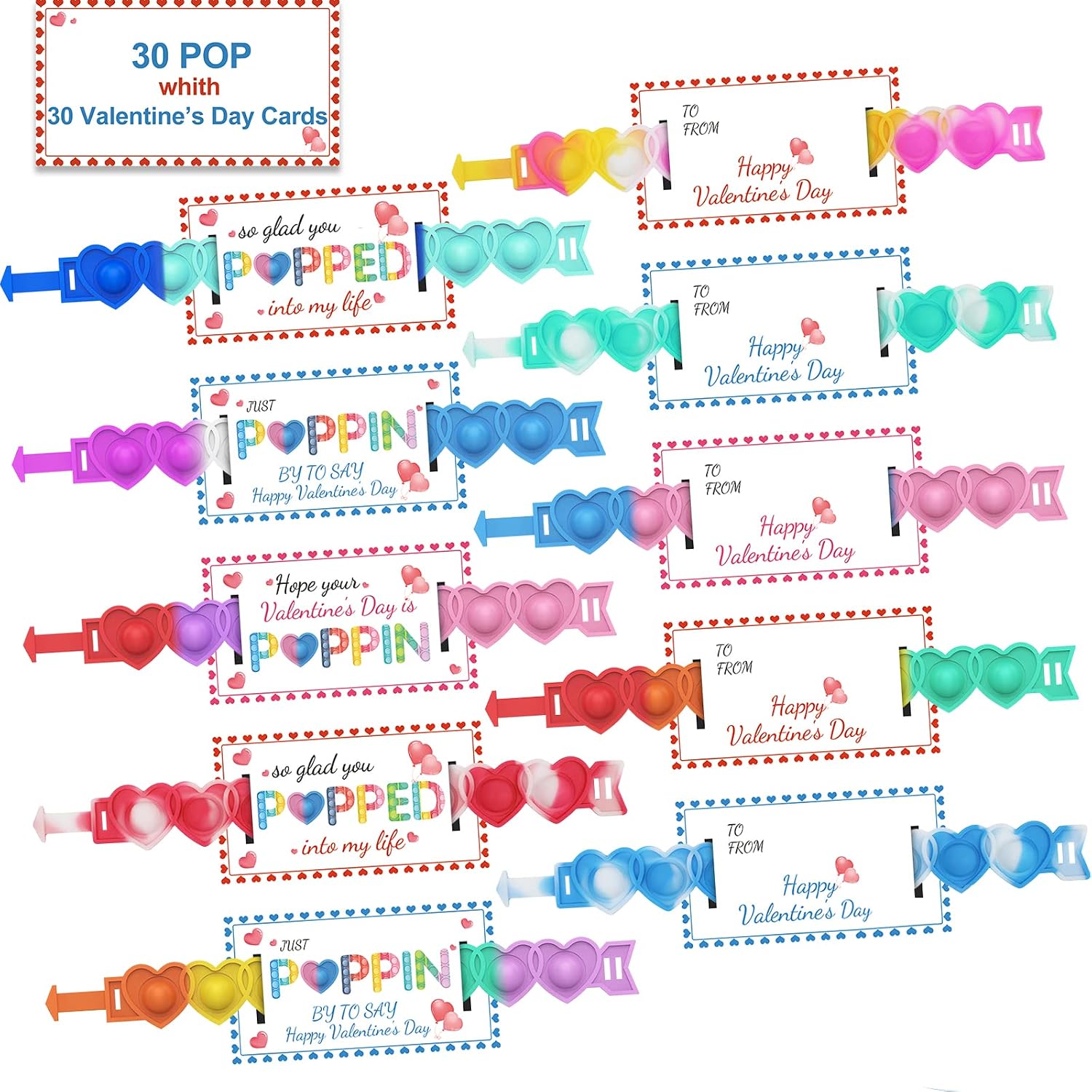
Class exchanges have a fixed guest list, a fixed date and a fixed format, which ought to make them the easiest party of the year. They turn into an emergency because the count is confirmed late and the packs are bought for the wrong number. None of that is inevitable.
Ask for the register count, and include the adults
Work from the actual class register rather than from memory, and ask whether the teacher and any assistant are part of the exchange. A class of 24 children is often 27 people once staff are included, and 27 does not come out of a 24-count pack.
Ask about siblings in other classes too. In smaller schools they are frequently included, which quietly turns a one-class order into something closer to two.
Why non-food has become the default
Many schools now require it outright. Even where they do not, a candy exchange excludes any child with an allergy from the part of the day that exists to include everyone, which is a poor trade for a very small saving.
Non-food options cost about the same per head. Sticker sheets, pop bracelets, squishy toys, slap bracelets, stress balls and pencil sets all land in the same price range as confectionery and sidestep the problem entirely.
Matched sets beat buying two things
A card-and-favor set pairs both halves in equal counts, so a 24-count set is 24 cards and 24 toys with nothing left over. Buying cards and toys separately produces the classic mismatch of 30 cards and 24 toys.
If you do buy separately, choose the toy first and match the card count to it. Toys come in more awkward numbers than cards do, so the toy is the constraint.
Read the age mark, not the aisle
A great many small favors carry a three-and-up mark because of small parts, and that mark applies to the whole assortment rather than to individual pieces. For younger classes this is the specification that matters most.
It also matters at collection time, when toddler siblings are in the room. A favor that is right for the class can still be wrong for the two-year-old who gets hold of it in the corridor.
Writing the cards is the actual work
Twenty-eight cards take a child considerably longer than any adult remembers. Cards with a printed name line and a from line are much faster than blank ones, and sets that come pre-slotted for the favor remove the assembly step completely.
Start three days out and split it across two sittings. That single change is what moves a class exchange out of the last-minute category, and it costs nothing at all.
Spares are not an indulgence here
This is the one occasion where running short genuinely upsets a specific, identifiable child. Buy at least two spare sets. If the count is 27, a 30-pack is correct rather than extravagant.
Spares also absorb the card that gets torn, the favor that arrives faulty, and the child who joins the class the week of the party. All three happen often enough to plan around.
Getting them to the classroom intact
Loose favors in a bag arrive as a tangle. If the set has no individual pouches, a small gift bag per child turns distribution into a two-minute job and survives the walk from car to classroom.
Label the box with the class name if more than one child in the family is doing an exchange. It sounds fussy and it prevents the specific disaster of the wrong box entering the wrong room.
Ordering with room to spare
Handling here takes one business day and standard delivery three to five, so an order placed a full week out arrives with margin. Ordering two days before a Friday exchange is where the late scramble comes from, not from anything the carrier does.
Order as soon as the register count is confirmed. Sealed packs can come back within our return window if the number changes, which makes ordering early the lower-risk choice rather than the riskier one.
Exchange packs on the shelf
- JOYIN 28-Pack Valentine's Day Mini Bear Plush Toys with Gift Cards — $19.99
- AYGXU 30-Count Valentine's Day Pop Bracelet & Card Exchange Set for Kids — $9.99
- Leetous 28-Pack Valentine's Heart Sticky Hands with Exchange Cards for Kids Classroom — $8.89
See everything in Party Favors.
The order of operations
Two weeks out, get the register count including staff and confirm the school food policy. One week out, order a matched set with two spares. Three days out, start the cards. The night before there should be nothing left but pairing them up.
Questions about anything above? Our FAQ covers the usual ones, the Shipping Policy has the delivery detail, and you can contact us directly — we answer within one business day.